
Knowledge Base
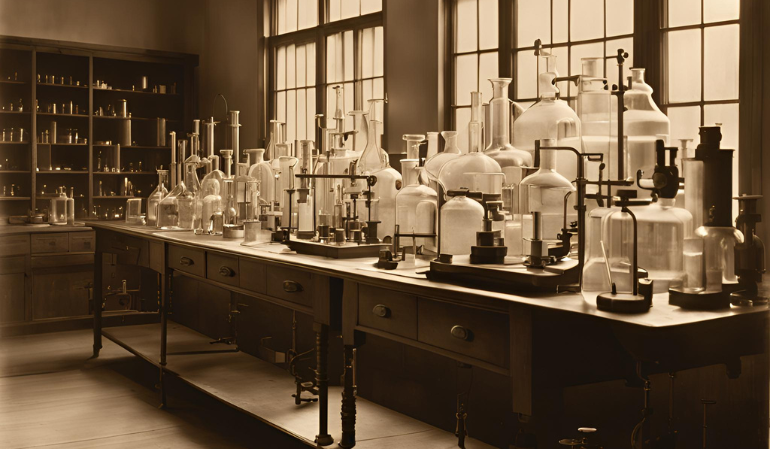
Conceptualization of EQA
History of External Quality Assurance (EQA) in Medical Laboratories
External Quality Assurance (EQA), also known as Proficiency Testing (PT), is a cornerstone of modern medical laboratory practice. It plays a critical role in ensuring the accuracy, reliability, and comparability of laboratory test results, which directly influence clinical decision-making and patient safety. The development of EQA has been gradual, shaped by scientific advances, regulatory needs, and growing awareness of the risks associated with inaccurate laboratory results.
Early Need for Quality Assurance in Laboratories
In the early 20th century, medical laboratories were expanding rapidly, but testing methods lacked standardization. Laboratories often used locally developed techniques, and results for the same test could vary significantly between institutions. As laboratory medicine became increasingly central to diagnosis and treatment, these inconsistencies posed serious risks to patient care.
The growing dependence on laboratory data created a clear need for systems that could independently verify laboratory performance. This need laid the foundation for external assessment mechanisms designed to compare results between laboratories and identify errors that internal quality control alone could not detect.
Emergence of Proficiency Testing (1940s–1950s)
Organized proficiency testing began to take shape in the late 1940s. Early programs demonstrated that sending identical samples to multiple laboratories and comparing results was an effective way to evaluate analytical performance and improve accuracy over time. These initiatives marked the transition from informal peer comparison to structured external quality assessment
In the United States, professional organizations played a leading role in advancing these efforts. The College of American Pathologists (CAP) became a major force in promoting laboratory quality, developing proficiency testing programs that later influenced accreditation standards worldwide.
Expansion and Structuring of EQA Programs (1960s–1970s)
By the 1960s, EQA programs were becoming more systematic and widespread. Instead of isolated exercises, schemes began operating on regular cycles, allowing laboratories to track performance trends over time and address persistent analytical issues.
A major milestone in Europe was the establishment of the UK National External Quality Assessment Service (UK NEQAS) in 1969. UK NEQAS provided structured, discipline-specific EQA schemes and became a model for national and international programs. During this period, EQA evolved beyond pass-or-fail assessment and increasingly emphasized education, method evaluation, and continuous improvement.
Regulatory Integration and Accountability (1980s–1990s)
As laboratory testing volumes and complexity increased, governments recognized the necessity of formal oversight. In the United States, the introduction of the Clinical Laboratory Improvement Amendments of 1988 (CLIA ’88) represented a turning point. CLIA made participation in proficiency testing mandatory for many laboratory tests and linked EQA performance to licensing and regulatory compliance.
Similarly, other countries incorporated EQA participation into national laboratory regulations and accreditation frameworks. This period marked EQA’s transition from a professional best practice to an expected and often legally required component of laboratory operations.
Global Harmonization and International Standards (1990s–2000s)
With increasing globalization of healthcare and diagnostics, international organizations sought to harmonize laboratory quality practices. The World Health Organization (WHO) published guidance documents in the late 1990s to support the establishment and operation of EQA schemes, particularly in low- and middle-income countries.
A major global milestone was the publication of ISO 15189 in 2003. This standard defined specific requirements for quality and competence in medical laboratories and reinforced the importance of participating in external quality assessment as part of a comprehensive quality management system.
Modern Developments in EQA (2010s–Present)
As EQA programs expanded, attention also turned to the competence of EQA providers themselves. The introduction of ISO/IEC 17043 in 2010 established international requirements for the design, operation, and evaluation of proficiency testing schemes.
Modern EQA has evolved well beyond simple analytical comparison. Contemporary schemes increasingly address:
- pre-analytical and post-analytical errors
- interpretation and reporting of results
- clinical relevance and patient impact
- root cause analysis and corrective actions
- EQA is now viewed as an educational and improvement-focused tool rather than a punitive measure. Its ultimate aim is to support patient safety by reducing diagnostic errors and improving confidence in laboratory results.
Importance of EQA in Patient Safety and Healthcare Quality
Accurate laboratory results are essential for correct diagnosis, treatment selection, and monitoring of disease. Even small analytical errors can lead to misdiagnosis or inappropriate therapy. By providing independent performance evaluation and benchmarking, EQA helps laboratories identify weaknesses, improve consistency, and demonstrate competence to regulators, clinicians, and patients.
Today, participation in EQA is universally recognized as a fundamental requirement of good laboratory practice and a key pillar of trustworthy healthcare systems.
References
- World Health Organization. Overview of External Quality Assessment (EQA). WHO, 2009.
- Deom A. Requirements and Guidance for External Quality Assessment Schemes for Health Laboratories. WHO/DIL/LAB/99.2, 1999.
- International Organization for Standardization. ISO 15189: Medical laboratories – Requirements for quality and competence. ISO, 2003.
- International Organization for Standardization. ISO/IEC 17043: Conformity assessment – General requirements for proficiency testing. ISO, 2010.
- Centers for Disease Control and Prevention. Clinical Laboratory Improvement Amendments (CLIA) – Overview.
- College of American Pathologists. History of Proficiency Testing and Laboratory Accreditation.
- UK National External Quality Assessment Service (UK NEQAS). History and Development of UK NEQAS.
- De la Salle B. External Quality Assessment in Laboratory Medicine. Biochemia Medica, 2017.
